A roof rack is one of the best upgrades you can make to a vehicle — and one of the easiest to get wrong. Buy the wrong style and it simply won't mount. Buy the right style but the wrong size and you'll fight wind noise, rub paint, or watch your load rating disappear. The good news: choosing correctly takes about five minutes once you know the three questions that matter.
Step 1: Identify Your Roof Type
Everything starts with what's already on your roof. Walk outside and look.
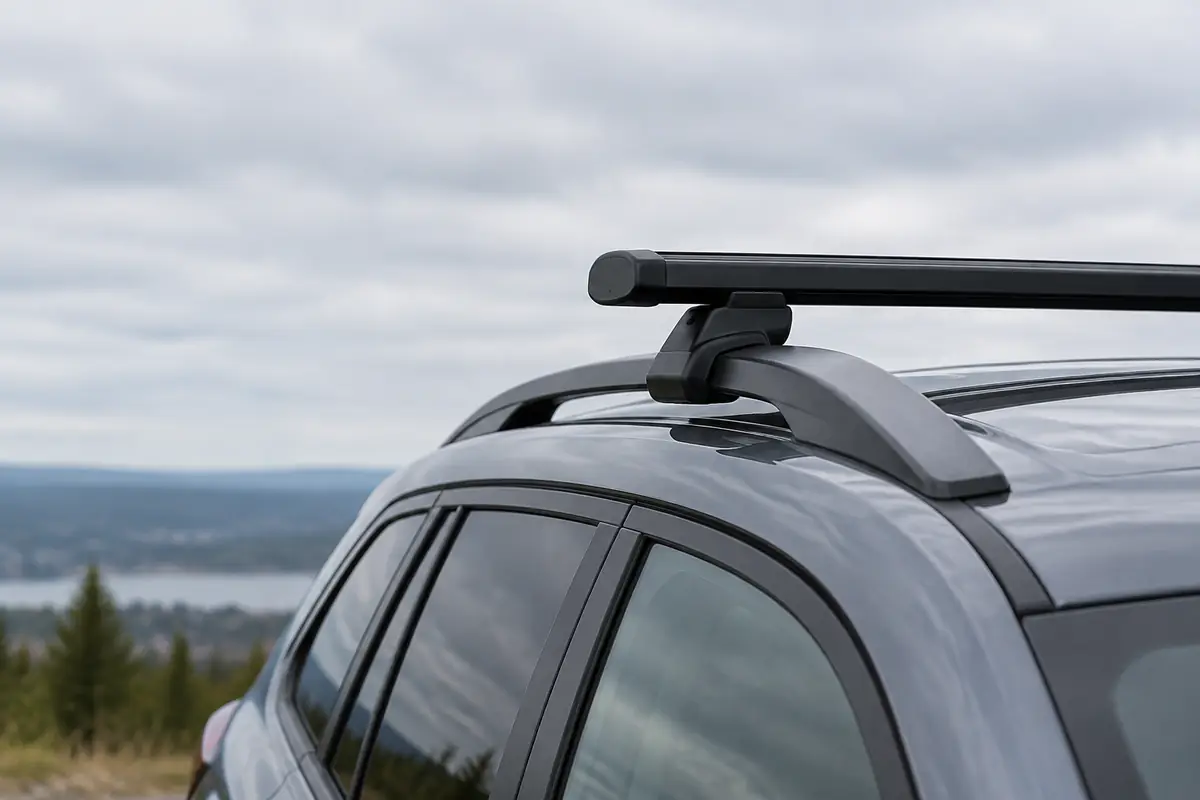
Raised side rails
You'll see two rails running front-to-back with a visible gap — usually an inch or so — between the rail and the roof itself. You can often slip your fingers underneath. These are the most common style on SUVs and crossovers, and they're the easiest to equip: clamp-style cross bars grip the rail directly, no drilling required. Our raised rail racks use hardened clamps with torque-limited bolts so you can't crush the rail by over-tightening.
Flush rails
These sit snug against the roof with no gap — a smooth, integrated look that many modern crossovers favor. They look sleek, but they need towers that wrap the rail rather than clamp it. Flush-rail racks use a fitted foot that follows the rail's curve, so matching the rack to your vehicle's rail profile matters even more here.
Fixed mounting points and tracks
Some trucks and SUVs hide threaded anchors under small plastic covers, or have pre-drilled tracks running along the roof. These are the strongest mounting systems available because they bolt straight into the vehicle's structure. Track-mount systems slide to adjust spacing, which makes them ideal if you swap accessories often.
Bare roof
No rails, no anchors? You'll need a clamp system that grips the door frame — or, for trucks, a bed-mounted rack. These work well but demand careful measuring of the door jamb width.
Step 2: Match the Rack to the Job
Once you know your mounting style, pick the platform:
- Cross bars alone — the foundation. Carry kayaks, skis, and bike trays, or use them as the base for everything below.
- Full rack systems — cross bars plus towers and landing pads in one kit. Best for bare-roof vehicles or anyone who wants maximum rigidity.
- Cargo carriers — enclosed boxes for weather protection or open baskets for awkward gear. Mounts to any cross bar pair.
Step 3: Respect the Numbers
Two numbers decide whether your rack is a workhorse or a liability. The first is the rack's dynamic load rating — how much weight it safely carries while driving. Quality aluminum racks handle 150 to 220 pounds. The second, and more important, is your vehicle's roof load rating, found in the owner's manual. Your real limit is always the lower of the two.
Remember that the limit includes the rack itself. A 40-pound rack carrying a 90-pound cargo box leaves you about 50 pounds of actual gear on a 180-pound rating.
Common Mistakes to Avoid
- Buying for looks, not rails. An aerodynamic rack that doesn't match your mounting style is shelf decoration.
- Ignoring bar length. Bars that overhang more than a few inches whistle at speed and can contact garage doors. Measure your roof width.
- Forgetting clearance. Tall cargo boxes plus a tall garage equals a bad afternoon. Note your new total height.
- Skipping the torque check. Clamps loosen over the first few hundred miles. Re-check after 100 miles, then monthly.
The Quick Fitment Checklist
Before you order, confirm: your rail type (raised, flush, track, or bare), your roof width between rails, your vehicle's roof load rating, and what you'll actually carry most often. Snap a photo of your roof from the side and email it to us — our fitment team confirms compatibility, usually within the hour.
Aluminum vs Steel: Which Material?
Most quality racks come in aluminum or steel, and both are genuinely good — they just optimize for different things. Aluminum is light (your fuel economy and your vehicle's payload both benefit), naturally rust-proof, and easily strong enough for any legal roof load. It's the right default for crossovers, SUVs, and anyone who takes the rack on and off seasonally. Steel wins on rigidity and scratch tolerance — it flexes less under point loads and shrugs off branches and ladder-bumps that would mark aluminum. Powder-coated steel is the workhorse choice for tradespeople and overlanders.
One honest caveat: a steel rack's extra weight counts against your vehicle's roof rating, so a "stronger" steel rack can actually leave you with less legal cargo capacity than a lighter aluminum one. Match the material to how you drive, not to a spec-sheet pissing contest.
Get those four things right and any quality rack will serve you for a decade of road trips. Get them wrong and even the most expensive system will disappoint. Five minutes of checking is the cheapest insurance in the roof rack world.