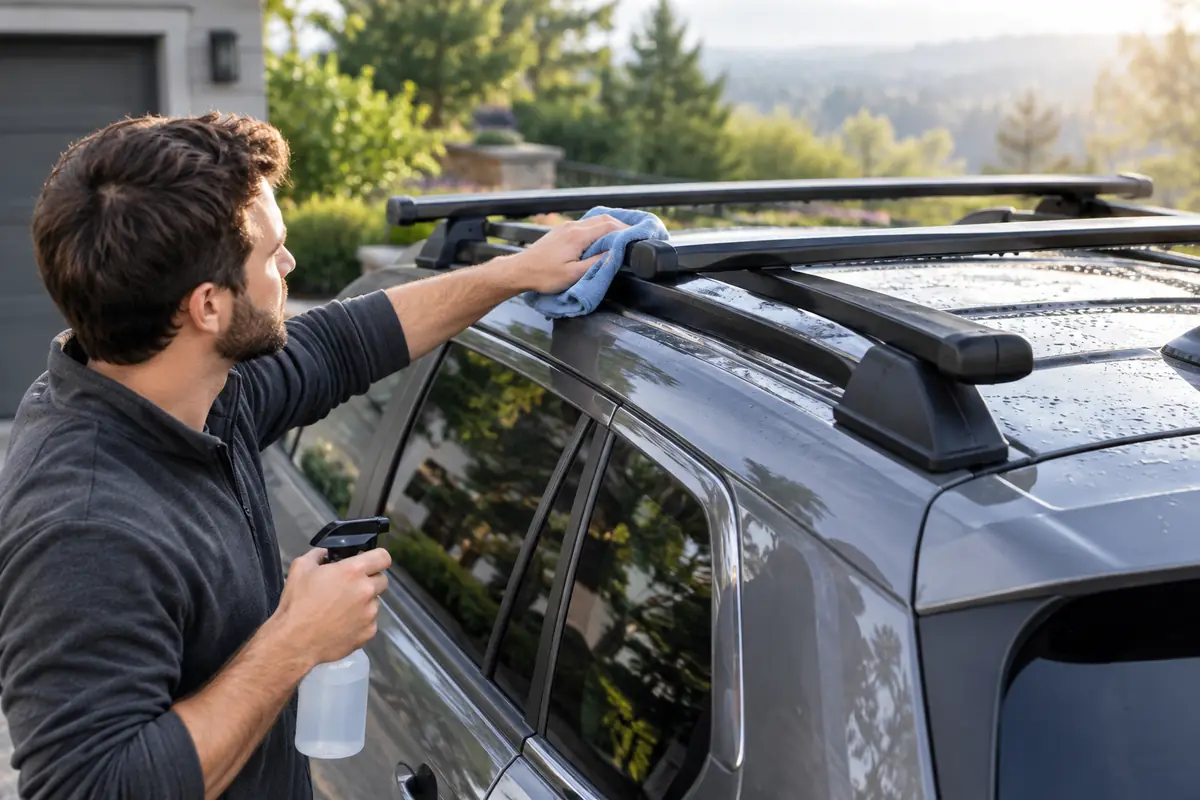
A roof rack lives in the worst neighborhood on your car: highest, wettest, sunniest, and most exposed to road grime. The good news is that rack maintenance takes minutes per season. Here's the short list that keeps both the rack and your paint in like-new condition.
Wash It Like You Mean It
Wash the rack with the car, not around it. Road film builds up under cross bars and inside clamp channels — exactly where rust starts on steel and where grit grinds paint. Run a mitt under the bars and through the tower channels every few washes. If you use an automatic wash, choose touchless; brush washes catch on bars and can loosen end caps.
Dry the rack after washing if you can. Standing water in clamp channels is the number one cosmetic complaint we hear, and it's entirely preventable.
The Paint-Saving Habits
- Wax under the feet. Wherever the rack touches the vehicle — rail tops, door frames, landing pads — a thin coat of wax lets parts slide microscopically instead of grinding.
- Check the rubber. Clamp pads and door-jamb protectors harden and crack over years. Replacement pads cost almost nothing and prevent metal-on-paint contact.
- Remove before the brush wash. If your bars come off in ten minutes, take them off for car washes and winter storage. The paint you save is the paint that matters.
Winter Care
Road salt is the enemy of steel racks and the frenemy of aluminum (it dulls the finish). Three habits get you through:
- Rinse the rack monthly in winter — a bucket and a mitt is fine, the car wash is fine, just get the salt off.
- Wipe a drop of oil through the lock cylinders in fall. Frozen locks are the most common winter service call, and they're preventable.
- Clear snow and ice from the rack before driving. A frozen 40-pound chunk of snow becoming a 200-pound projectile is not a theoretical problem.
The Quarterly Torque Check
Every three months — tie it to the seasons — re-torque all clamps to spec and inspect for wear: cracked pads, chewed hex heads, frayed straps. The shake test from our install guide takes thirty seconds and catches 90% of developing problems. Racks that get this check simply don't come loose on the highway.
Storage Between Trips
Should you take the rack off between trips? If it comes off easily and you don't use it weekly — yes. You'll save fuel, eliminate noise, and halve the wear on both rack and rails. Store bars horizontally on a garage wall hook, hardware bagged and zip-tied to the tower so nothing wanders off before next season.
When to Replace Parts
Inspect straps yearly and replace any with fraying or UV cracking — straps are consumables, like wiper blades. Replace clamp pads when they're visibly compressed or cracked. The bars and towers themselves, on a quality aluminum or properly maintained steel system, are decade-scale equipment.
Aluminum vs Steel: Different Care, Different Schedules
Aluminum doesn't rust, but it oxidizes — a chalky white film in wet climates. A yearly wipe with any automotive protectant keeps the finish even. Steel's enemy is chips: touch up powder-coat scratches with clear nail polish or touch-up paint the week you notice them, especially near the coast where salt air turns a chip into a bloom of rust in a month. Neither material asks for much — they just ask for different things.
A Simple Yearly Schedule
- Spring: full wash, torque check, inspect pads and straps after winter salt season.
- Summer: UV check — faded straps and cracked pad rubber get replaced before the big trip, not during it.
- Fall: oil the locks, check end caps, decide whether the rack stays on for winter or comes off for storage.
- Winter (if the rack stays on): monthly rinse, snow cleared before driving, torque re-checked after the first freeze-thaw cycle.
Print it, tape it inside a garage cabinet, and rack maintenance becomes a five-minute ritual instead of a memory test.
The Two-Minute Pre-Trip Check
Before any highway trip, add this to your departure routine alongside tire pressure: shake the rack, squeeze the straps, and glance at the load's height against your dash card. It's the same shake test from installation day, and it catches the two failures that actually strand people — a clamp that loosened over the month, and a strap that stretched under load. Two minutes at the driveway beats two hours on a shoulder somewhere.
Fifteen minutes a season. That's the entire maintenance budget for a rack that'll outlive the car it's bolted to.