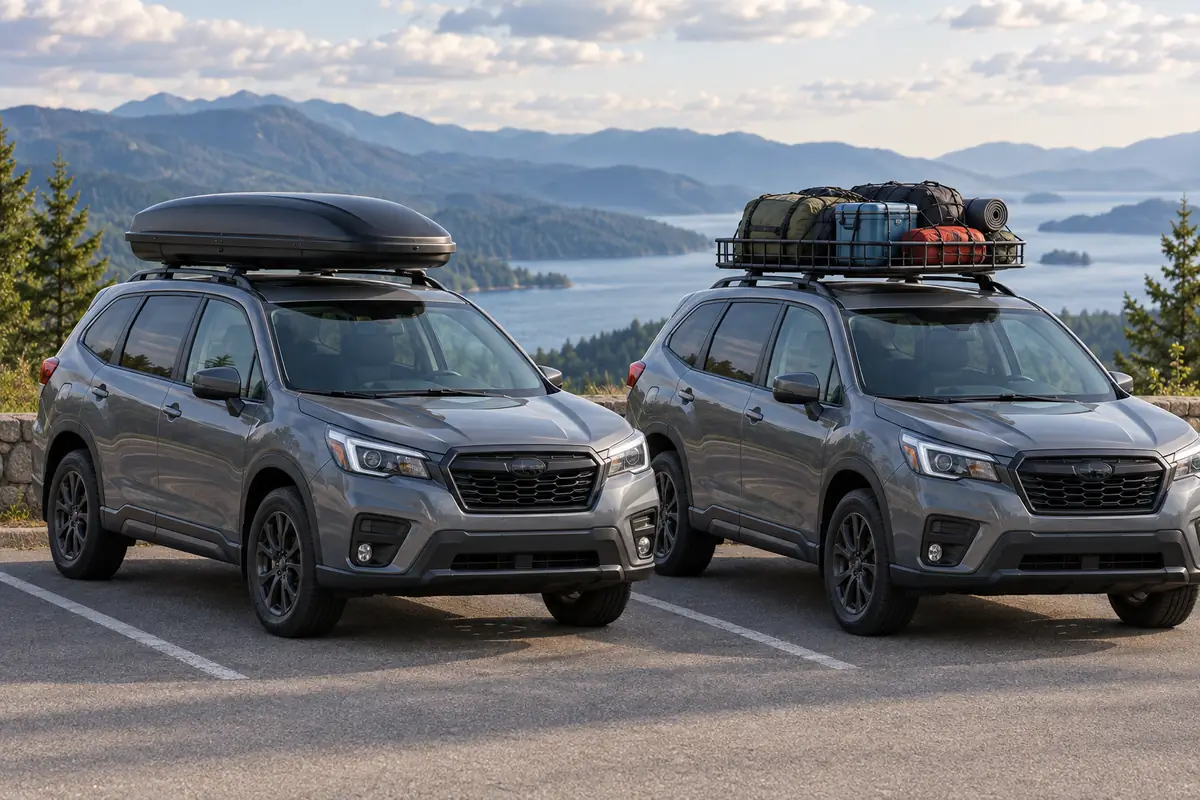
You've got the rack. Now: enclosed box or open basket? Both mount to the same cross bars, both free up your cabin, and both have a clear best-use case. Here's the honest comparison.
The Case for a Roof Box
An enclosed cargo box is the right call when your gear needs weather protection and security. Luggage, sleeping bags, electronics, anything fabric — a box keeps rain, road grime, and prying eyes away from all of it. Modern boxes are aerodynamic, lockable, and open from both sides so you can load from either side of the vehicle.
The trade-offs: boxes are bulky to store when not in use (a 15-cubic-foot box needs garage wall space), they add wind noise if poorly mounted, and their fixed shape limits awkward cargo. Price is also higher — you're paying for the shell.
Choose a box if: you carry luggage, camp in variable weather, or leave gear on the car overnight.
The Case for a Roof Basket
An open steel or aluminum basket wins on flexibility and value. Weird shapes — firewood, a stroller, muddy boots, a spare tire — just go in. Straps anchor anywhere along the rails. Baskets cost less, weigh less, and store flat when you're not using them. Visibility is better too: no blind spot over the rear window.
The trade-offs: nothing is weather-protected (a cargo bag solves that for soft goods), and everything is visible to thieves, so baskets are a poor choice for overnight stops with valuables aboard.
Choose a basket if: you carry odd-shaped gear, use the rack occasionally, or want maximum capacity per dollar.
Capacity Math
Boxes are rated in cubic feet — a 15 cu ft box swallows roughly four large duffels. Baskets are rated by dimensions; a typical 6-foot basket carries bulky loads but soft gear needs bagging. Either way, remember the capacity guide's rule: rack, carrier, and cargo all count against your vehicle's roof rating. A heavy steel basket eats more of that budget than an aluminum box of similar volume.
Wind Noise and Fuel Economy
A well-designed box is often quieter than a basket — the smooth shell sheds air, while a basket's rails and mesh stir it. Whichever you choose, mount it per the torque guide and add a fairing if noise appears. Expect a 5–10% fuel economy hit with either carrier at highway speed; that's the price of a roofful of cargo, not a flaw in your purchase.
Our Practical Take
- Family road trips, all-weather gear: box.
- Weekend hauler, mixed odd cargo: basket.
- Both, on a budget: basket now, add a cargo bag for soft goods.
Security: The Honest Version
A box locks, and that matters more than most buyers realize. Gear inside a locked box is invisible and genuinely hard to get — most thefts from vehicles are crimes of opportunity aimed at whatever's visible. A basket shows everything, so plan baskets for gear you're comfortable losing or take valuables with you at stops. Neither option protects against someone determined and unhurried; both options deter the parking-lot opportunist, which is the threat you'll actually face.
Loading Technique for Each
Boxes reward packing discipline: heavy items centered over the bars, soft bags filling the ends, nothing pressing the lid. Overfilled boxes pop open at speed — if the lid needs a shove to close, something's coming out. Baskets reward strap discipline: use at least two straps in different directions, ratchet soft loads tight, and net anything small enough to bounce out. A pool-nete over the top costs nothing and ends the worry entirely.
Storage When You're Not Using It
Boxes need wall space — a ceiling hoist or wall cradle turns a garage eyesore into a two-minute mount. Baskets store flat against a wall or slide behind seats in a truck. If storage is genuinely impossible, that's a real argument for the basket; a box that lives permanently on the car costs you fuel economy every single commute, whether or not you're traveling.
One Hybrid Worth Knowing
Some carriers split the difference: an open basket with a fitted, waterproof cargo bag inside. You get the basket's flexibility and flat storage with near-box weather protection for a lower combined cost than most boxes. It's not as sleek as a molded box and the bag needs strapping care, but for the buyer who camps twice a year and hauls mulch twice a month, it's the pragmatic sweet spot.
Whichever way you go, both mount to the same cross bars you already have — which is exactly why we recommend starting with a quality rack and adding the carrier that matches your next trip.